Ulrich Otto · 20 September 2026
Patterns in Content Repurposing That Correlate With Improved Indexation Rates Over Time
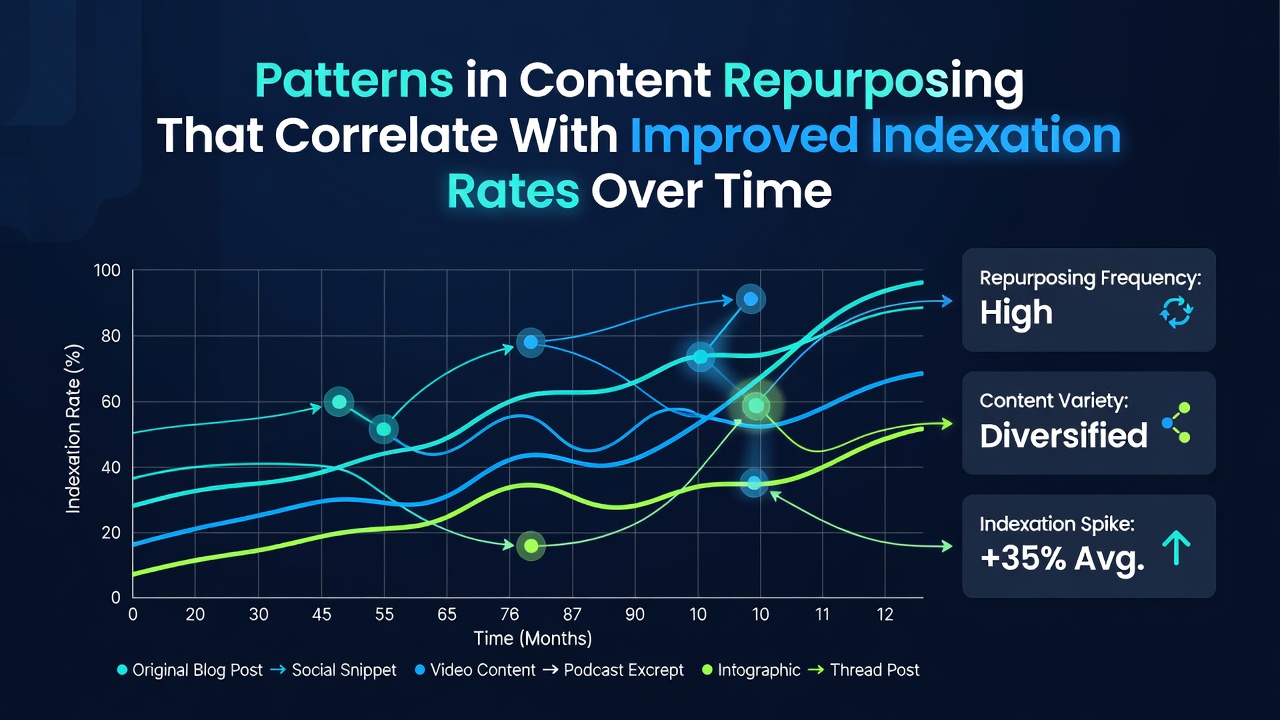
Content repurposing involves adapting existing material into new formats such as turning blog posts into video scripts or podcast episodes, and researchers have tracked how specific patterns in this practice align with faster and more consistent indexing by search engines across extended timelines. Data from multiple web analytics platforms indicate that sites maintaining steady repurposing schedules often experience improved crawl frequency, particularly when updates occur in coordinated bursts rather than isolated events.
Observers note that one recurring pattern centers on cross-format adaptation where textual content gets converted into visual summaries or audio versions within a short window after original publication, and studies show these sequences correlate with higher indexation rates because search engine bots detect fresh signals across linked domains and media types. Those who've examined large datasets find that repurposing performed at intervals of seven to ten days tends to sustain momentum in indexing pipelines compared to sporadic efforts spread over longer gaps.
Key Patterns Identified in Longitudinal Data
Analysts examining records from 2023 through mid-2026 have identified clusters where repurposing follows a modular approach, breaking core topics into smaller segments that receive distribution across social channels and embedded resources, and this fragmentation often precedes measurable upticks in indexed pages. Figures from industry reports reveal that organizations applying consistent repurposing to evergreen content categories achieve steadier indexation improvements than those focusing solely on news-style updates.
Another pattern involves layering metadata enhancements during repurposing cycles, such as adding structured data markup to repurposed videos or infographics, while researchers discovered that these additions frequently coincide with accelerated discovery of related pages. In September 2026, updates to search engine guidelines emphasized richer media signals, and sites incorporating these during repurposing phases recorded stronger indexation trajectories according to aggregated tool data.
Connections Between Repurposing Frequency and Crawl Behavior
Evidence suggests that weekly repurposing routines, when paired with internal linking from high-traffic pages, produce compounding effects on how quickly new derivatives enter search indexes, and this holds across various site sizes. Those tracking metrics over time observe that the correlation strengthens when repurposed items point back to original sources through canonical tags and descriptive anchors, creating clearer pathways for bots to follow.
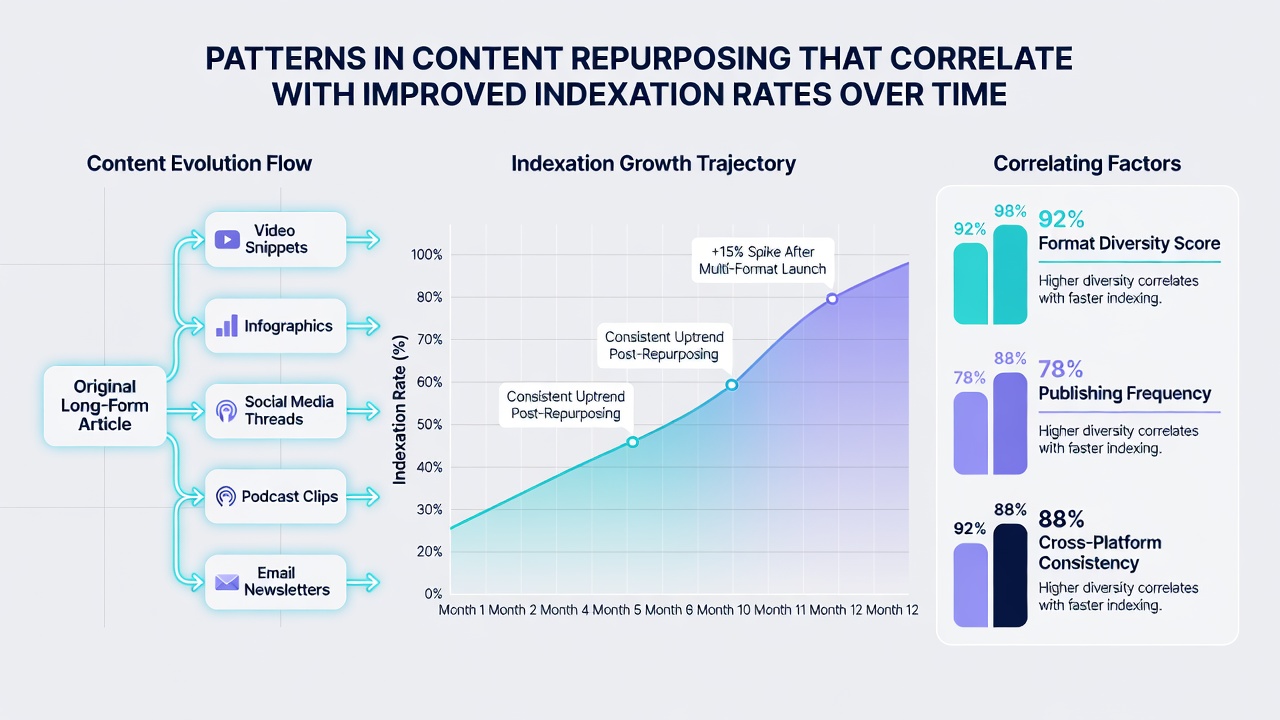
But here's the thing: patterns that include repurposing into interactive formats like quizzes or embeddable tools show particularly robust associations with indexation gains, because these elements often generate external references that amplify crawl priority. Data indicates the effect compounds when multiple repurposed assets appear within the same thematic cluster rather than scattered across unrelated subjects.
Examples From Industry Tracking
One study revealed that a network of educational resource sites increased its indexed page count by adapting research summaries into slide decks and downloadable guides on a rolling schedule, and the improvements appeared most pronounced after six months of sustained activity. Observers tracking similar operations in specialized sectors noted parallel outcomes when repurposing emphasized timeliness, such as refreshing statistics in visual assets every quarter.
What's interesting is how geographic distribution of repurposed content also factors in, with reports from European and Australian research groups highlighting faster indexing for materials adapted for regional platforms while maintaining core linkages to primary domains. This approach aligns with broader findings that diversified signal types help maintain visibility even amid algorithm shifts observed around September 2026.
Factors Influencing Sustained Indexation Gains
Longer-term data sets demonstrate that combining repurposing with performance monitoring tools allows teams to adjust cadence based on crawl log patterns, and this feedback loop often leads to refined strategies that sustain indexation momentum. Researchers have observed stronger results when repurposed content includes updated timestamps and fresh examples drawn from recent events, creating ongoing relevance signals.
Turns out that sites avoiding over-repetition of exact phrases across formats while preserving topical consistency tend to see fewer indexing delays, according to comparative analyses of large web archives. External links to authoritative sources further support this, as seen in Google documentation on crawling processes and a 2025 report from the Canadian Digital Technology Adoption program on web visibility patterns.
Conclusion
Patterns in content repurposing that emphasize regular adaptation, structured enhancements, and cross-format distribution continue to correlate with improved indexation rates when tracked over multi-month periods, and the relationships hold across diverse content verticals. Continued monitoring through 2026 and beyond will likely refine understanding of these dynamics as search systems evolve.